Building a Clavichord
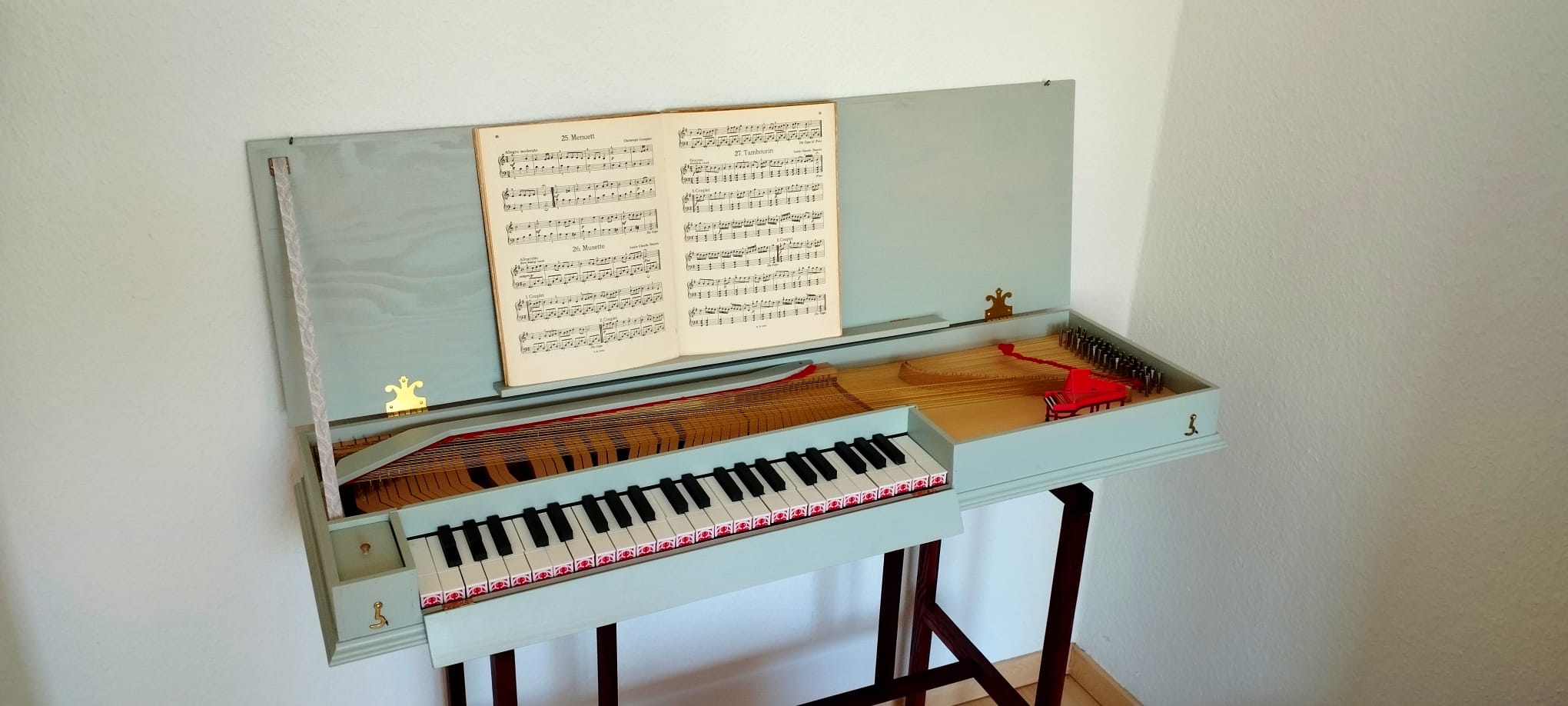
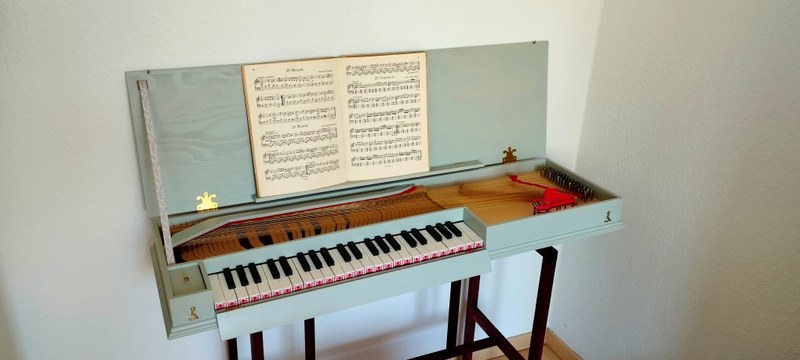
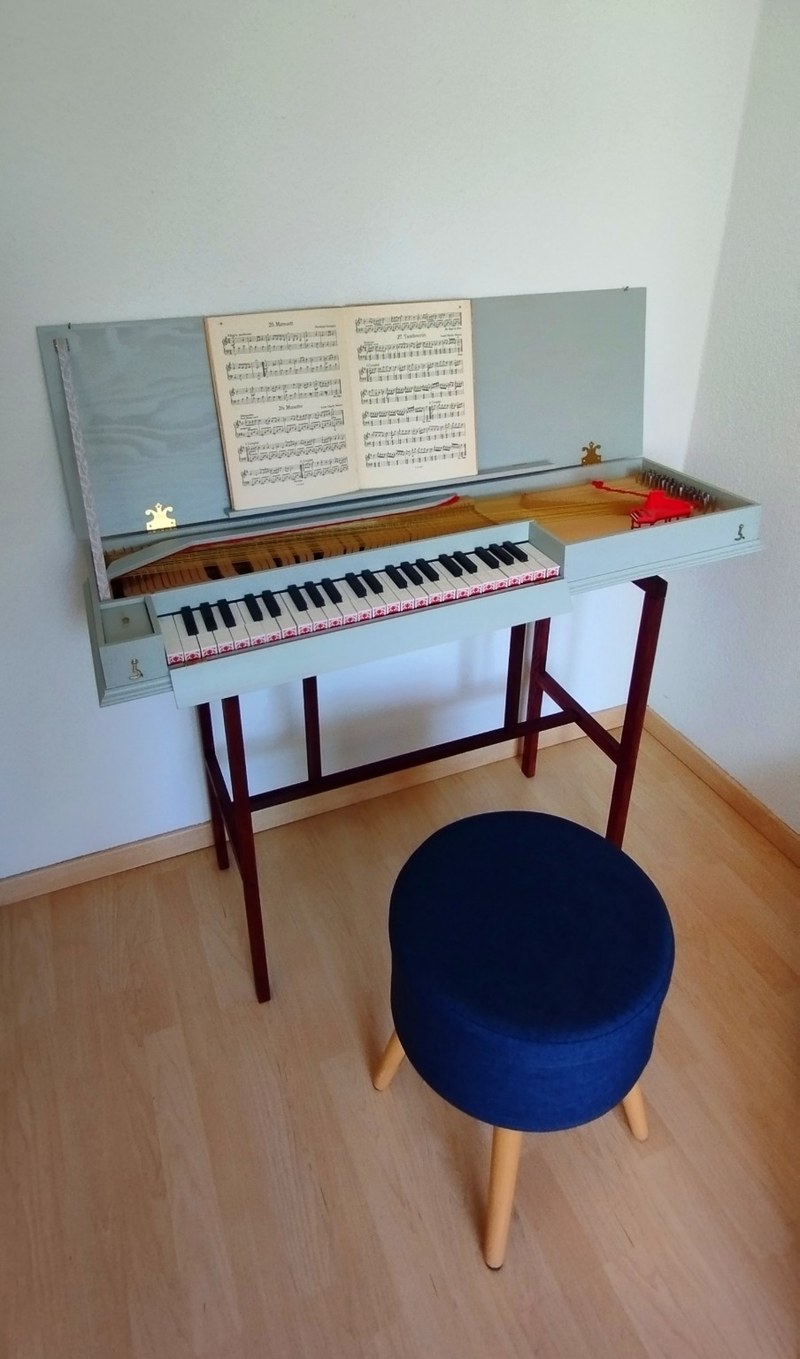
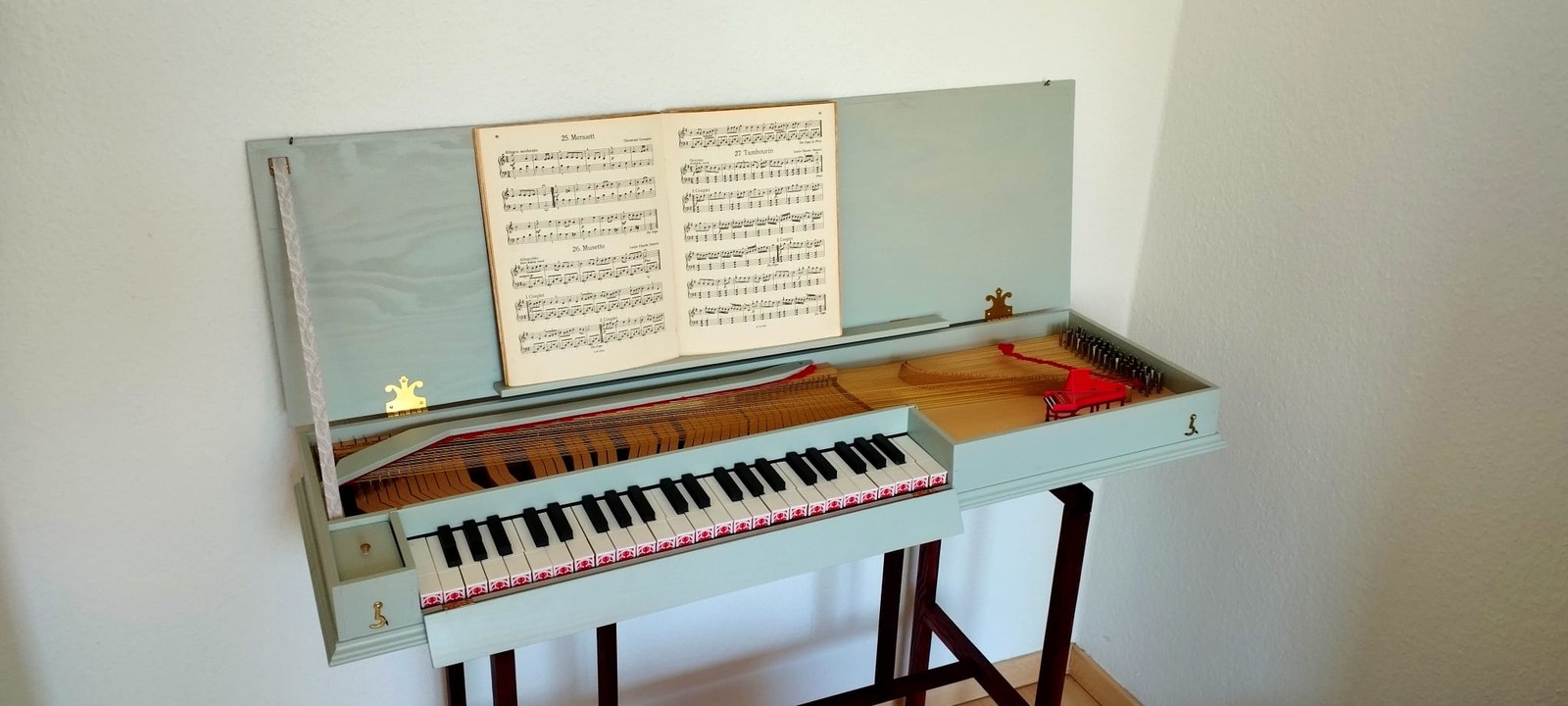
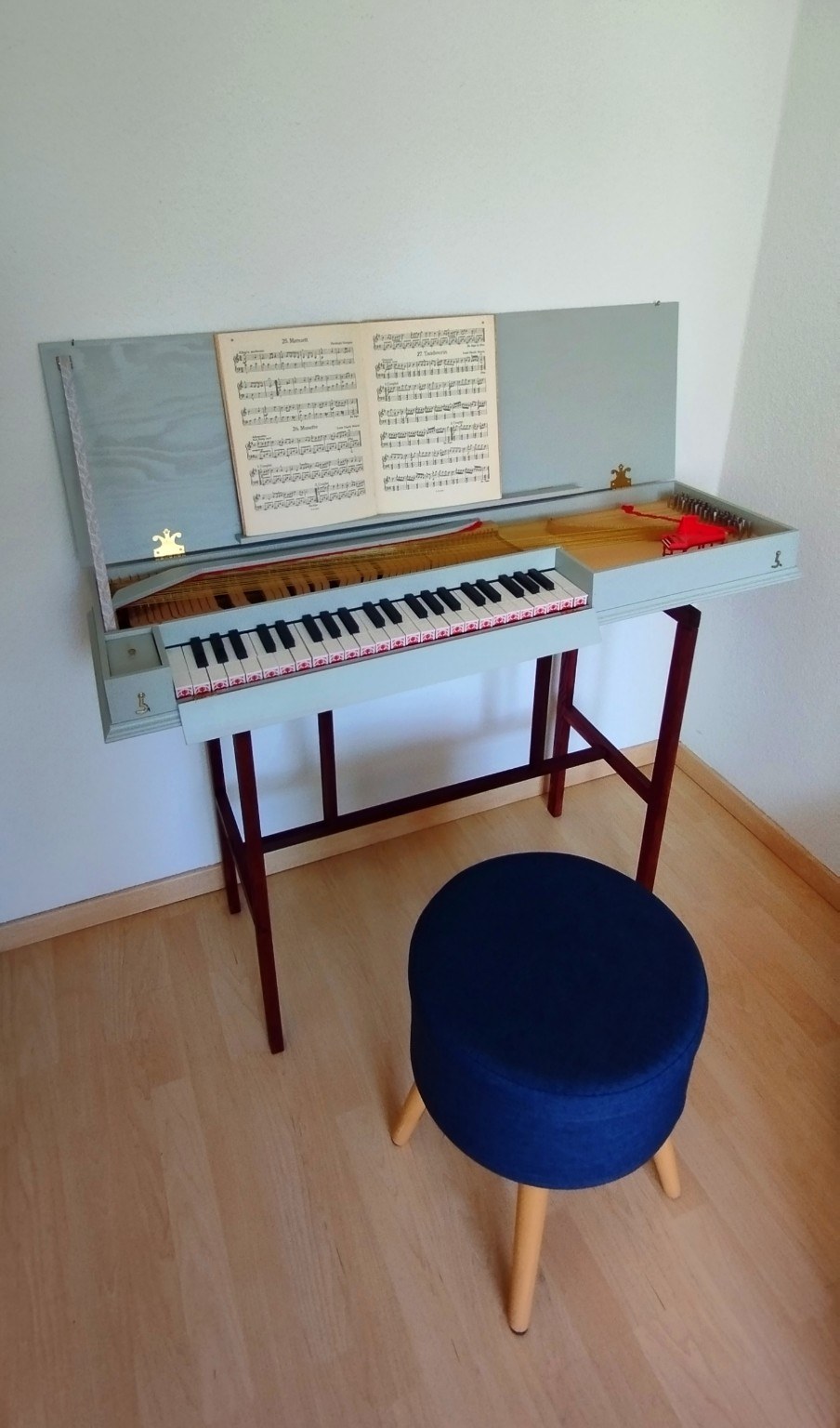
In 2025, I completed one of the most ambitious projects I have undertaken so far: building a fully playable clavichord from scratch. Rather than creating a decorative replica, my goal was to construct an instrument that follows historical principles while embracing selected modern manufacturing techniques where they offer practical advantages.
The result is a compact, fully functional two-course clavichord inspired by an original Swedish instrument preserved in the collection of Kenneth Sparr.
Historical Inspiration
The instrument is based on the Swedish clavichord X5414, documented by Kenneth Sparr as part of his extensive research on historical Scandinavian keyboard instruments.
The original instrument can be explored here:
Rather than copying every detail exactly, I used the original as the foundation for dimensions, scaling, string layout, bridge geometry and overall appearance while adapting several construction details to suit modern workshop methods.
The plans can also be downloaded -> here.
Technical Specifications
| Specification | Description |
|---|---|
| Builder | Leif-Erik Hallmann |
| Year | 2025 |
| Compass | Short octave (C–F, F♯–c³) |
| Stringing | Two-course |
| Fretting | Partially fretted |
| Temperament | Quarter-comma meantone |
| Pitch | Approximately A = 400–410 Hz |
| Case | Pine and beech |
| Soundboard | Moon-phase alpine spruce |
| Action | Brass tangents |
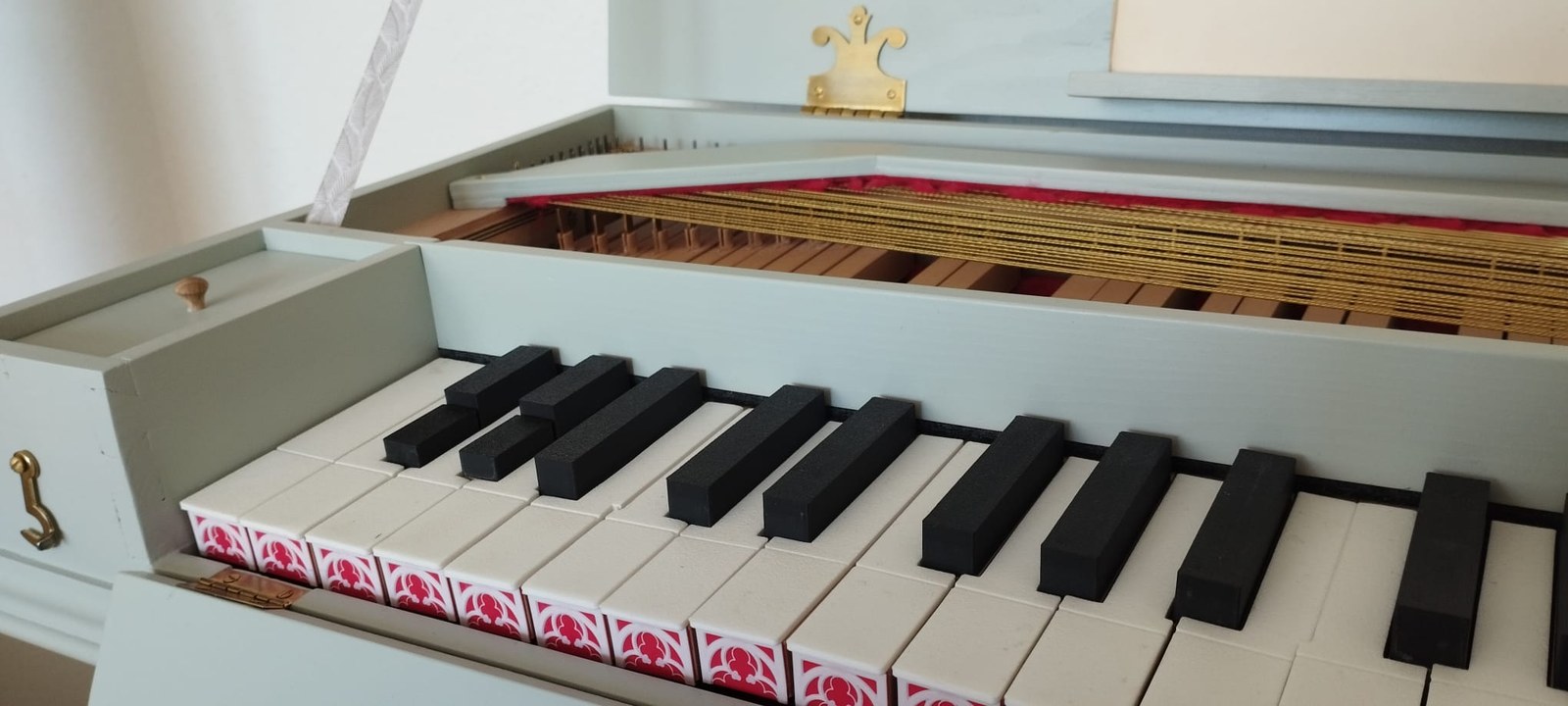
| Keys | Fully 3D printed |
| Finish | Historically inspired painted finish |
| Dimensions | approx. 105 × 30 × 10 cm |
| Weight | approx. 3 kg |
Traditional Materials
Although this is a modern instrument, I deliberately chose many traditional materials.
The soundboard is made from moon-phase alpine spruce, specially selected for musical instruments. The tuning pins, brass hardware and tangents were obtained from Marc Vogel GmbH, one of Europe's leading suppliers of parts for historical keyboard instruments.
Useful resources:
The choice of professionally manufactured hardware significantly simplified the construction while ensuring historically appropriate dimensions and materials.
Modern Manufacturing
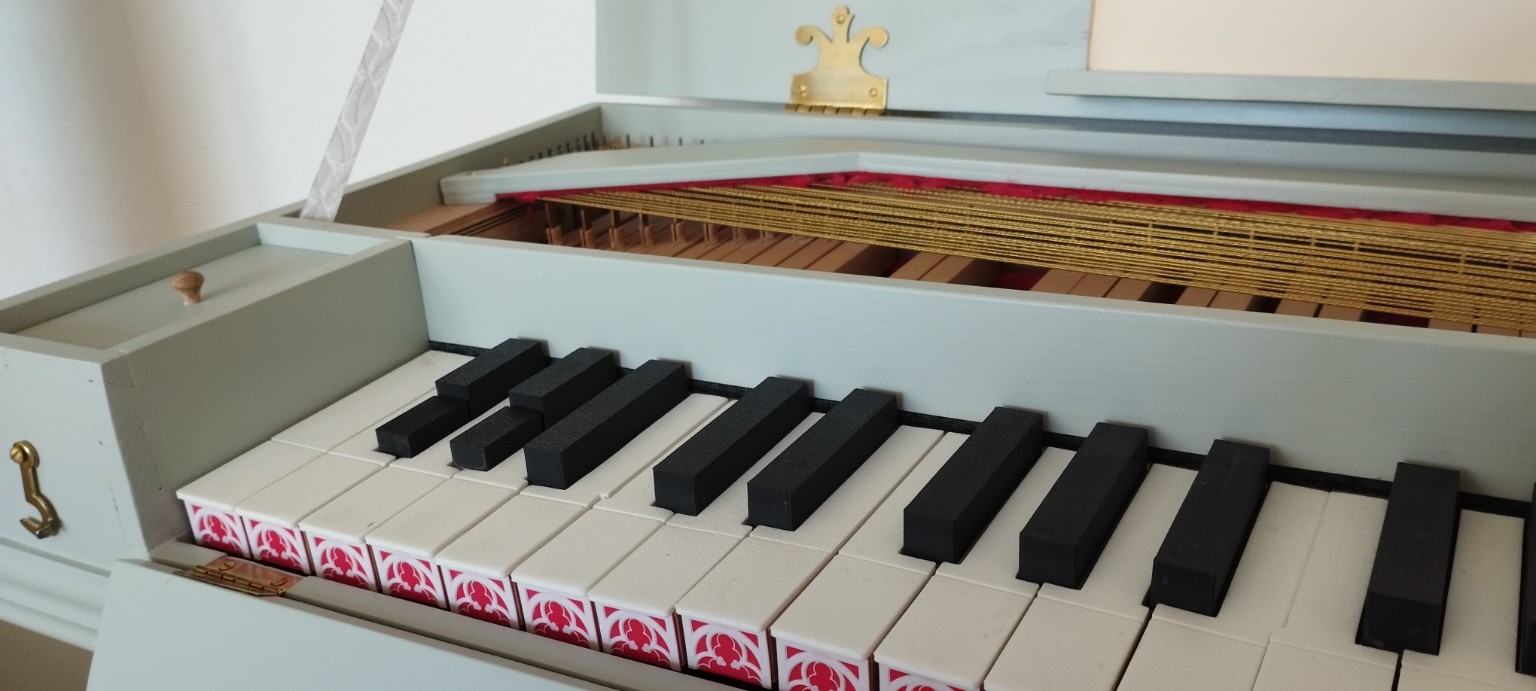
The most unconventional aspect of the instrument is undoubtedly the keyboard.
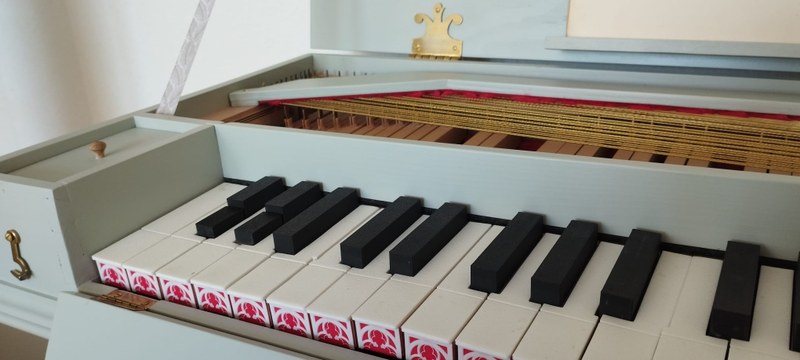
Instead of building traditional wooden keys, every natural and accidental key was designed in CAD software and manufactured using 3D printing.
The 3D printed parts can be downloaded -> here.
This approach offered several advantages:
- extremely consistent geometry
- precise repeatability
- rapid prototyping
- easy replacement of individual components
- freedom to incorporate decorative front panels directly into the design
Although the manufacturing process is modern, the keyboard geometry itself follows historical proportions as closely as practical.
The project demonstrates that additive manufacturing can successfully complement traditional instrument making without compromising musical functionality.
Construction
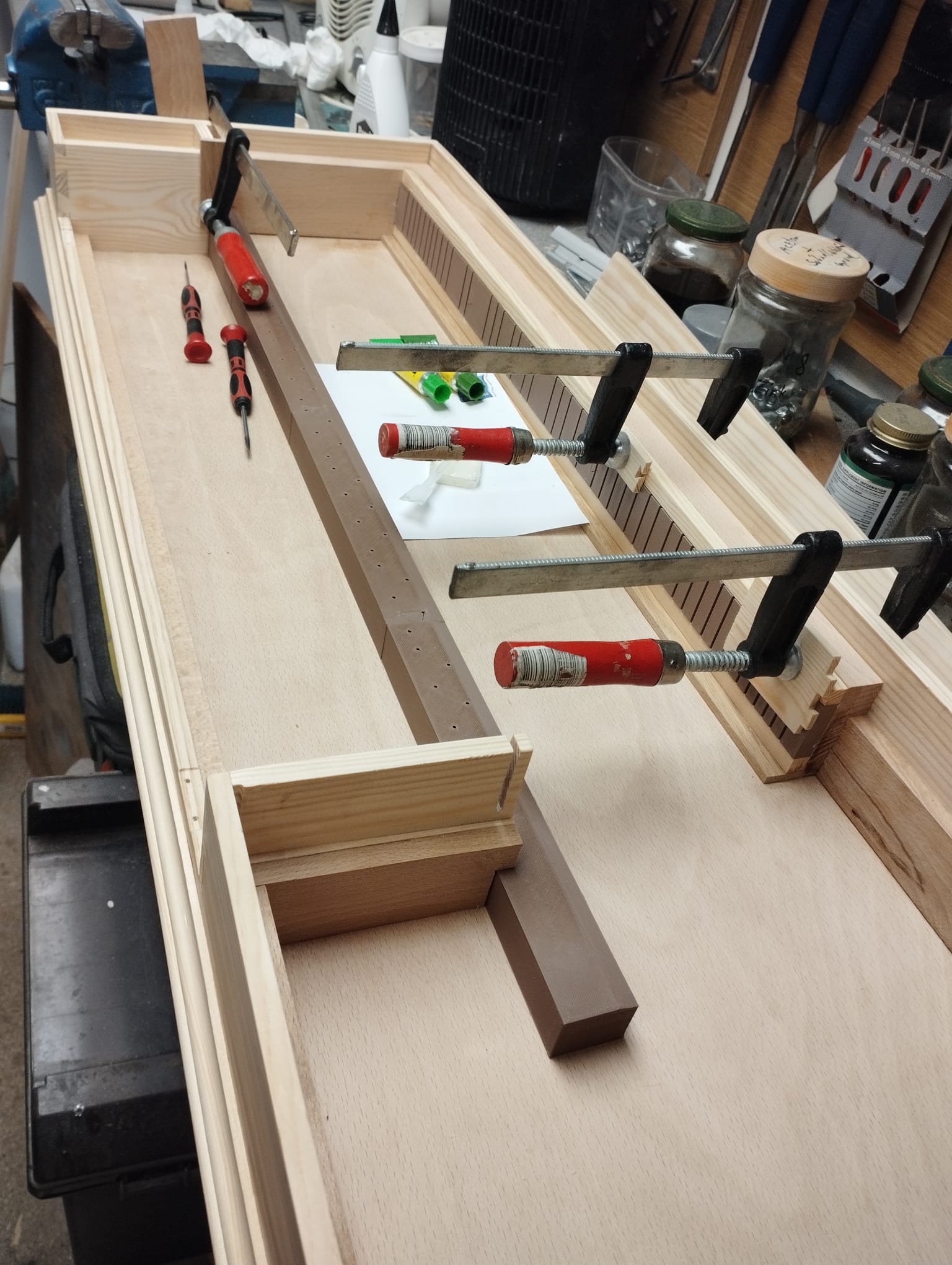
The case was built primarily from pine and beech.
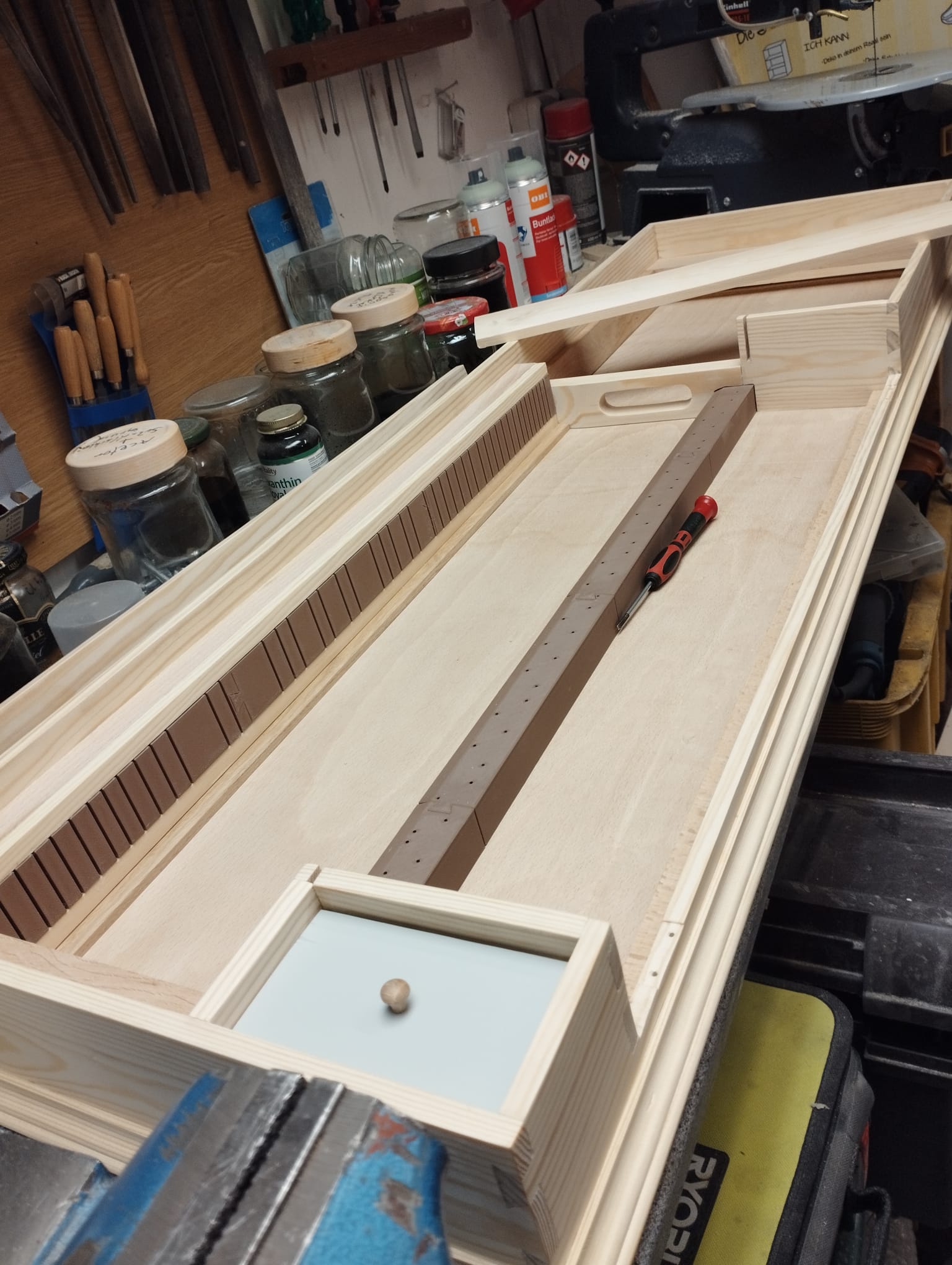
Particular attention was paid to:
- bridge positioning
- string scaling
- tangent alignment
- soundboard coupling
- tuning stability
- transportability
The instrument follows the historical concept of a compact domestic clavichord rather than that of a museum replica.
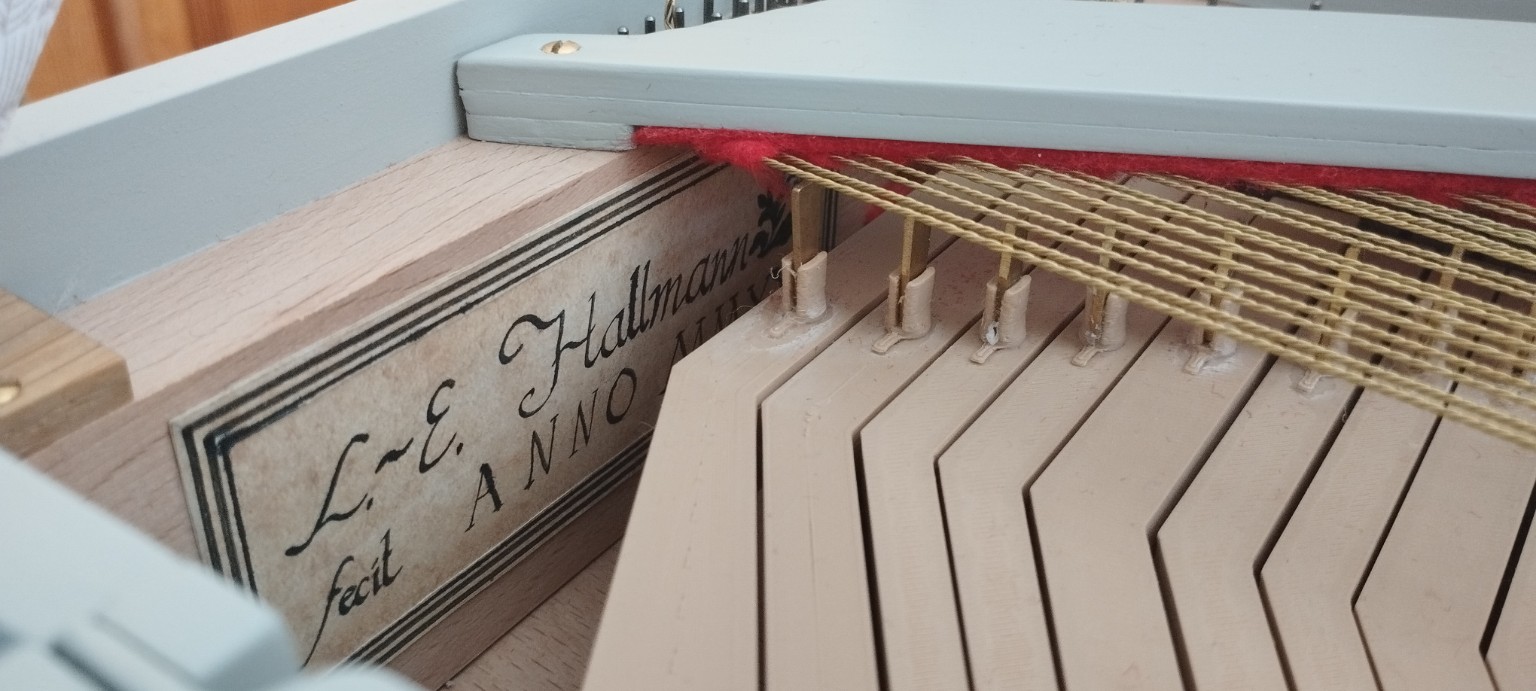
A builder's label reading
L.-E. Hallmann
fecit anno MMXXV
was added inside the instrument in the traditional manner.
Musical Characteristics
The clavichord remains one of the most intimate keyboard instruments ever developed.
Unlike the harpsichord or organ, the tangent remains in contact with the string during the entire note, allowing the performer to influence dynamics and even produce Bebung, a subtle vibrato unique to the clavichord.
The chosen meantone temperament and lower pitch (approximately A = 400–410 Hz) complement Renaissance and early Baroque repertoire particularly well.
A Dialogue Between Past and Present
Rather than reproducing an eighteenth-century instrument with absolute historical accuracy, this project explores how traditional craftsmanship and modern engineering can coexist.
Historical construction principles were preserved wherever they directly influence sound and playing characteristics, while digital tools such as CAD modelling and 3D printing were employed where they improve precision, efficiency or reproducibility.
The resulting instrument is therefore neither a museum copy nor an experimental prototype—it is a fully playable clavichord that bridges three centuries of instrument making.
It has become not only one of my favourite woodworking projects, but also a fascinating intersection of historical research, acoustics, digital fabrication and musical performance.