
PipeOrganMap.com
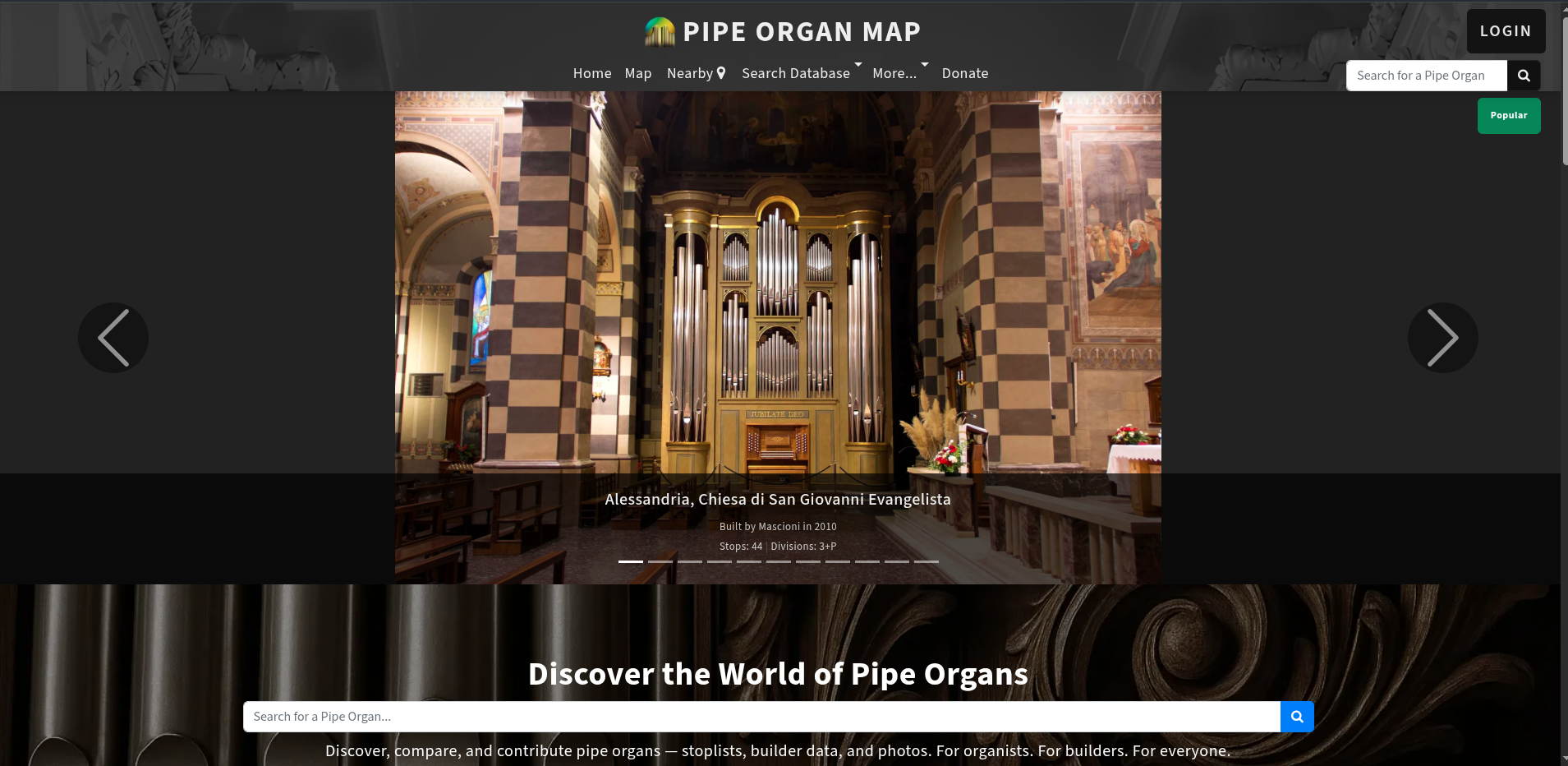
PipeOrganMap.com is an online platform dedicated to documenting and preserving the world's pipe organ heritage. What started as a personal side project has grown into an extensive international database that enables musicians, organ builders, researchers, historians, and enthusiasts to discover and explore pipe organs from around the globe.
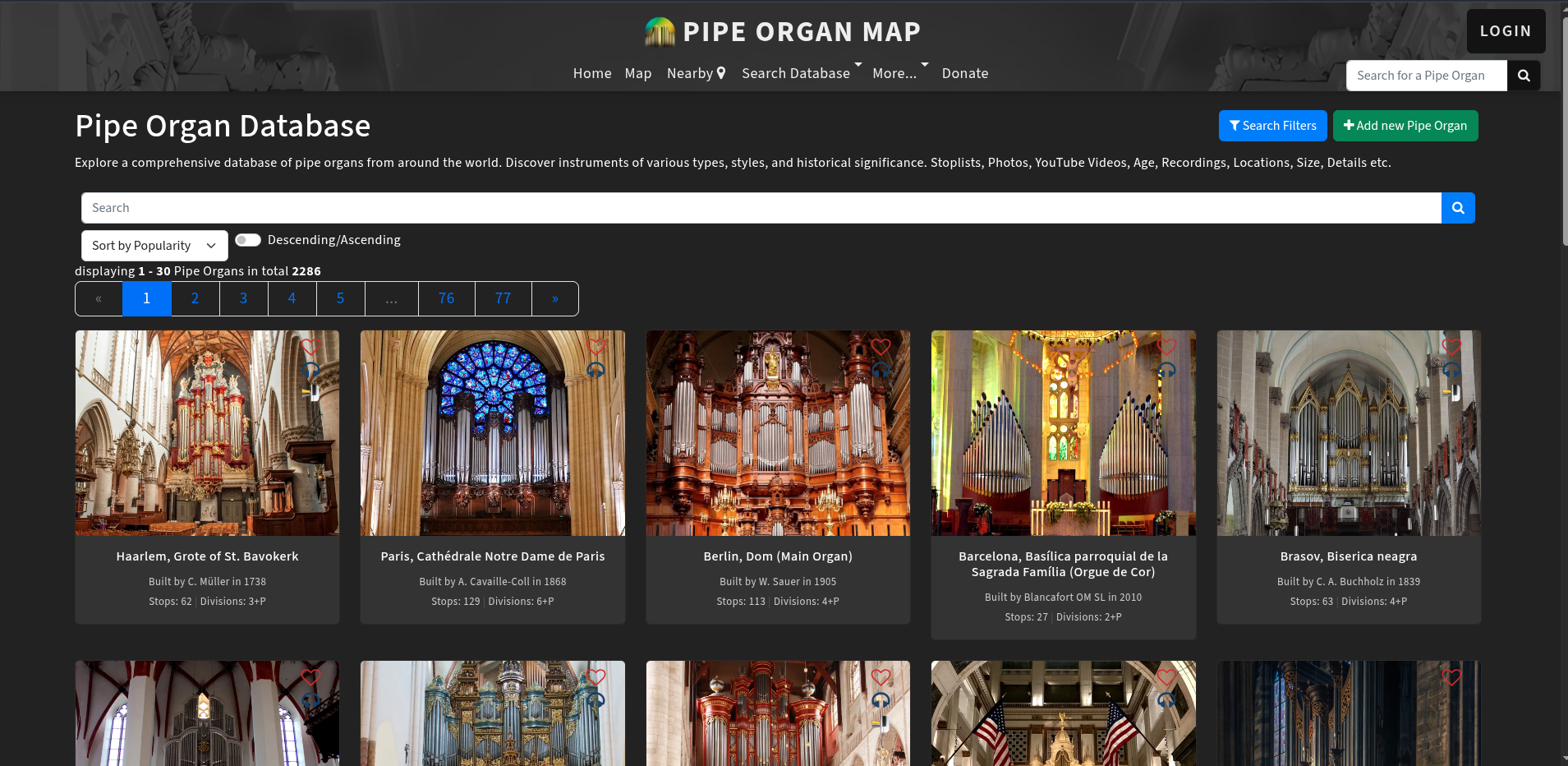
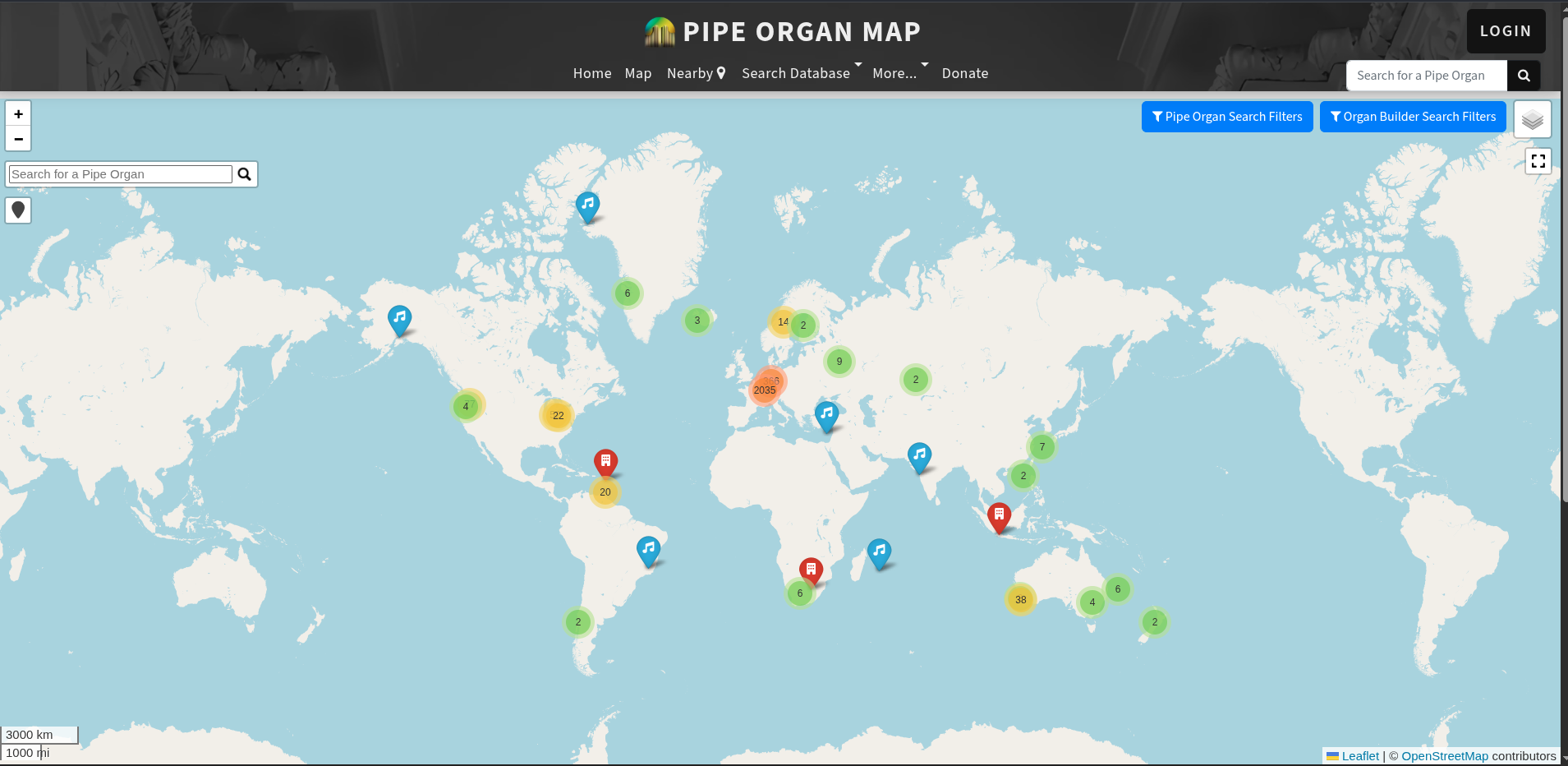
The project combines historical documentation with modern web technologies, making organ-related information accessible through an intuitive map interface, advanced search functions, and continuously expanding datasets.
Purpose
Pipe organs are among the largest and most complex musical instruments ever built. Despite their cultural importance, comprehensive information about many instruments is difficult to find or distributed across countless local sources.
PipeOrganMap.com was created to solve this problem by providing a single, searchable platform that combines:
- A worldwide map of pipe organs
- Technical specifications and stoplists
- Organ builders and restoration companies
- Historical information
- Images and documentation
- Sources and references
- Geographic search and discovery
The long-term goal is to become one of the most comprehensive freely accessible databases for pipe organs worldwide.
Features
The platform offers considerably more than a simple directory.
Current features include:
- Interactive worldwide map
- Detailed organ pages
- Organ builder profiles
- Advanced search
- Nearby organ discovery
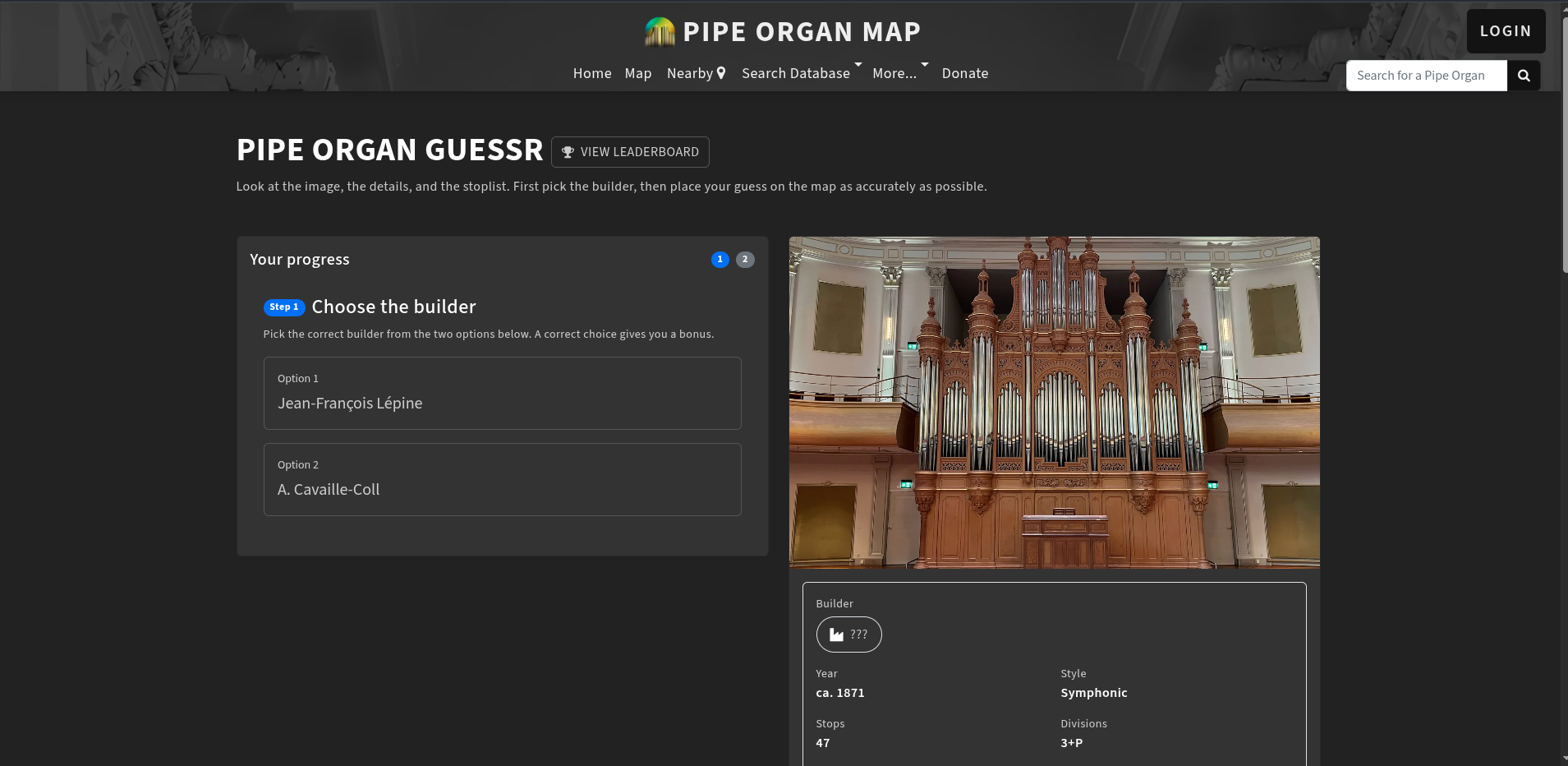
- Pipe Organ GeoGuessr Game
- Ranking by popularity
- User accounts
- Contribution system
- Favorites
- Automatic PDF generation
- Responsive interface for desktop and mobile devices
Many entries also provide automatically generated printable PDFs containing the complete technical specification.
Community-Driven Documentation
A central concept of PipeOrganMap is collaborative documentation.
Registered users can contribute new organs, improve existing information, upload photographs, and help complete missing technical details. To encourage high-quality contributions, the platform includes several achievement badges and contributor milestones, rewarding users for complete entries, first uploads, highly viewed organs, and long-term participation.
This community approach allows the database to grow continuously while preserving valuable local knowledge.
Technology Stack
PipeOrganMap is developed entirely as a custom web application.
The current backend is based on:
- Python
- Flask
- SQLAlchemy
- PostgreSQL
The frontend combines:
- HTML5
- Bootstrap and custom CSS
- JavaScript
- Leaflet for interactive maps
The production environment runs on Linux using:
- State-of-the-art reverse proxy
- Waitress as the WSGI server
- Automated caching
- Background processing
- Modern email authentication
The entire system is designed for efficient searching and rendering despite a continuously growing database.
Search Engine Optimization
A significant amount of development effort has gone into making the content easily discoverable.
Implemented features include:
- Search-engine-friendly URLs
- Canonical URLs
- Structured metadata
- Open Graph support
- Automatic meta descriptions
- XML sitemaps
- Internal cross-linking between organs, builders, and locations
- Performance optimization through caching
These measures allow individual organ pages to appear in search engine results and help researchers discover historical instruments more easily.
PipeOrganMap is an actively maintained project.
By the Numbers
PipeOrganMap continues to grow with every new contribution.
The platform currently contains:
- Thousands of documented pipe organs
- Organ builders from numerous countries
- Historical and modern instruments
- Visitors from around the world
- Continuously expanding technical documentation
- An increasing collection of photographs, stoplists, and historical sources
An Ongoing Personal Project
PipeOrganMap represents the intersection of several of my long-standing interests: organ music, history, software engineering, database design, and geographic information systems.
Every aspect of the platform—from database architecture and backend development to frontend implementation, server administration, search engine optimization, and data collection—has been designed and implemented as a personal project. The result is a continuously evolving platform that not only documents cultural heritage but also serves as a practical showcase of modern full-stack web development and long-term software engineering.
Visit the project at https://pipeorganmap.com to explore thousands of pipe organs, discover remarkable instruments near you, or contribute your own knowledge to help preserve one of the world's richest musical traditions.